Understanding Meridians: The Body’s Energy Pathways
Your body is more than just bones, muscles, and organs. According to Traditional Chinese Medicine (TCM), you have an invisible network of energy pathways called meridians. Think of them like rivers flowing through your body, carrying vital life force—or Qi (pronounced “chee”).
When Qi flows freely and balanced, you feel energized, calm, and healthy. But when these pathways get blocked or stagnant, you experience tension, fatigue, pain, and illness.
Meridian therapy works by unblocking these pathways and restoring smooth Qi flow—like clearing a congested highway so traffic can move freely again.
How Meridian Therapy Works
Meridian therapy uses several techniques to stimulate and balance your meridians:
- Meridian Massage: Direct pressure and movement along meridian pathways to release tension and activate Qi
- Acupuncture: Tiny needles placed at specific meridian points to open blockages
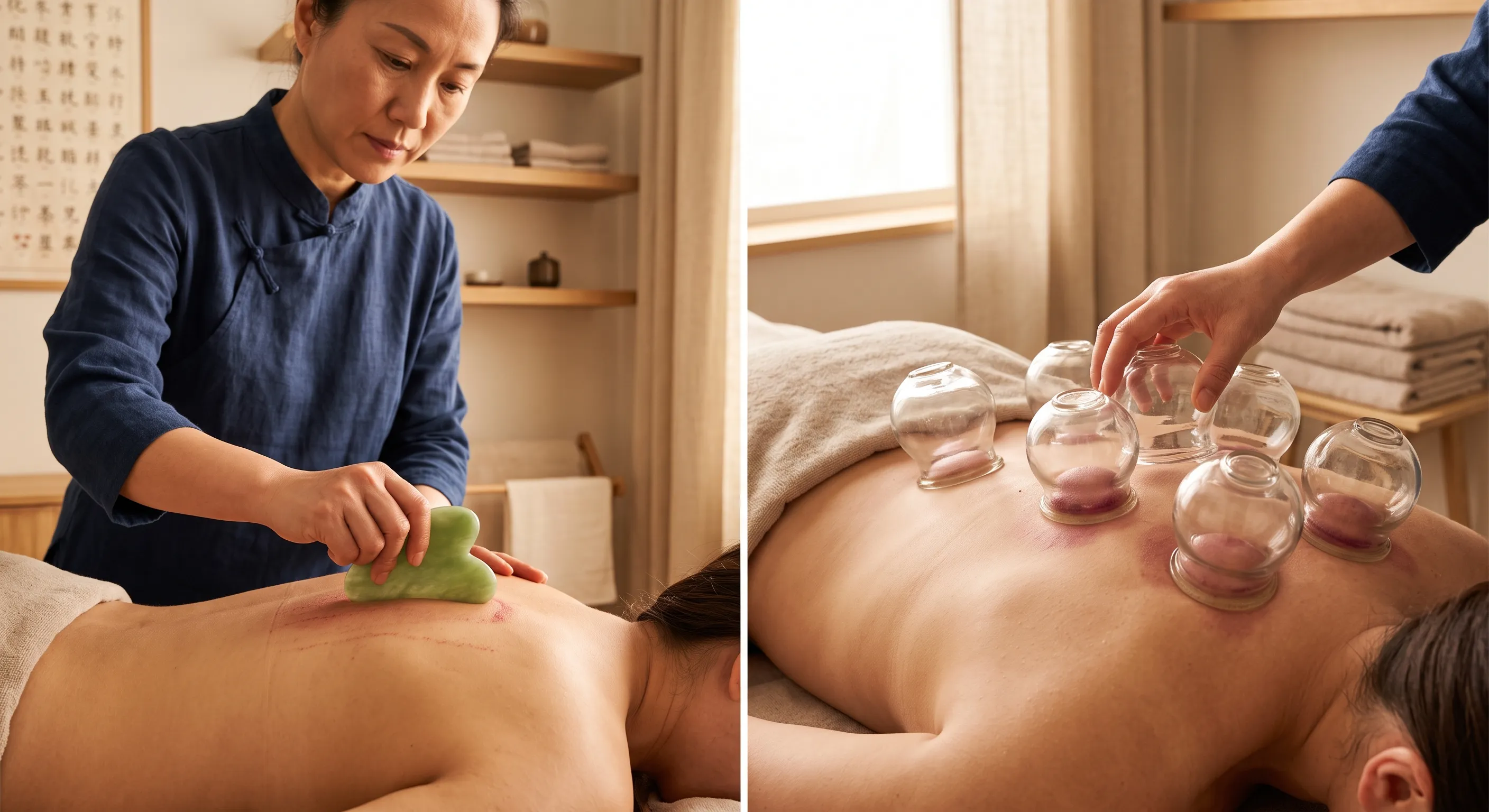
- Cupping & Gua Sha: Suction and scraping tools that stimulate meridian points and improve circulation
- Moxibustion: Warming the meridians with burning herbs to boost Qi
Each technique works on the same principle: when you stimulate the right meridian points, your body’s natural healing power activates.
The Science Behind the Ancient Wisdom
For over 2,500 years, TCM practitioners have mapped the human meridian system with stunning accuracy. Modern research is finally catching up:
- Studies show meridian acupuncture triggers the release of endorphins and reduces inflammation
- Meridian massage increases blood flow and lymphatic drainage
- Regular meridian stimulation balances the nervous system and reduces stress hormones
You don’t need to fully understand the “why” to experience the benefits. Thousands of people feel better after meridian therapy—stronger energy, less pain, deeper sleep, better digestion—and that’s what matters.
Common Signs Your Meridians Need Attention
- Chronic tension or pain (back, neck, shoulders)
- Low energy despite adequate sleep
- Digestive issues or bloating
- Difficulty sleeping or racing thoughts at night
- Emotional sensitivity or mood swings
- Frequent colds or immune weakness
- Cold hands and feet
If any of these sound familiar, meridian therapy might be exactly what you need.
What to Expect in Your First Session
Your therapist will begin by asking about your health, goals, and any pain or tension you’re experiencing. They’ll assess which meridians need attention, then use appropriate techniques—massage, cupping, or other methods—to open blockages and restore balance.
Most people feel deeply relaxed during treatment. Some experience immediate relief; others notice improvements over several sessions as their Qi rebalances.
Getting Started with Meridian Therapy
Meridian therapy isn’t a quick fix—it’s a path to deeper wellness. Think of it like exercise: one workout helps, but consistent practice transforms.
Many clients see the best results with a series of sessions (typically weekly or bi-weekly) followed by monthly maintenance. This gives your body time to heal and your Qi to stabilize.
FAQ: Meridian Therapy Questions
Is meridian therapy safe? Yes. When performed by a trained practitioner, meridian therapy is very safe. Always tell your therapist about any health conditions or medications.
How many sessions will I need? This depends on your condition and goals. Acute issues may improve in 2-3 sessions; chronic conditions usually benefit from a series of 4-8 sessions followed by maintenance.
Will it hurt? Meridian massage ranges from gentle to firm, depending on your preference. You should feel relaxed, never in pain. Speak up if pressure feels too intense.
Can I combine meridian therapy with other treatments? Absolutely. Meridian therapy pairs beautifully with conventional medical care, physical therapy, and other wellness practices.
Ready to experience meridian therapy for yourself? Book your first session today and discover how balanced Qi can transform your health.
Or explore our full range of meridian therapies to find the perfect treatment for your needs.