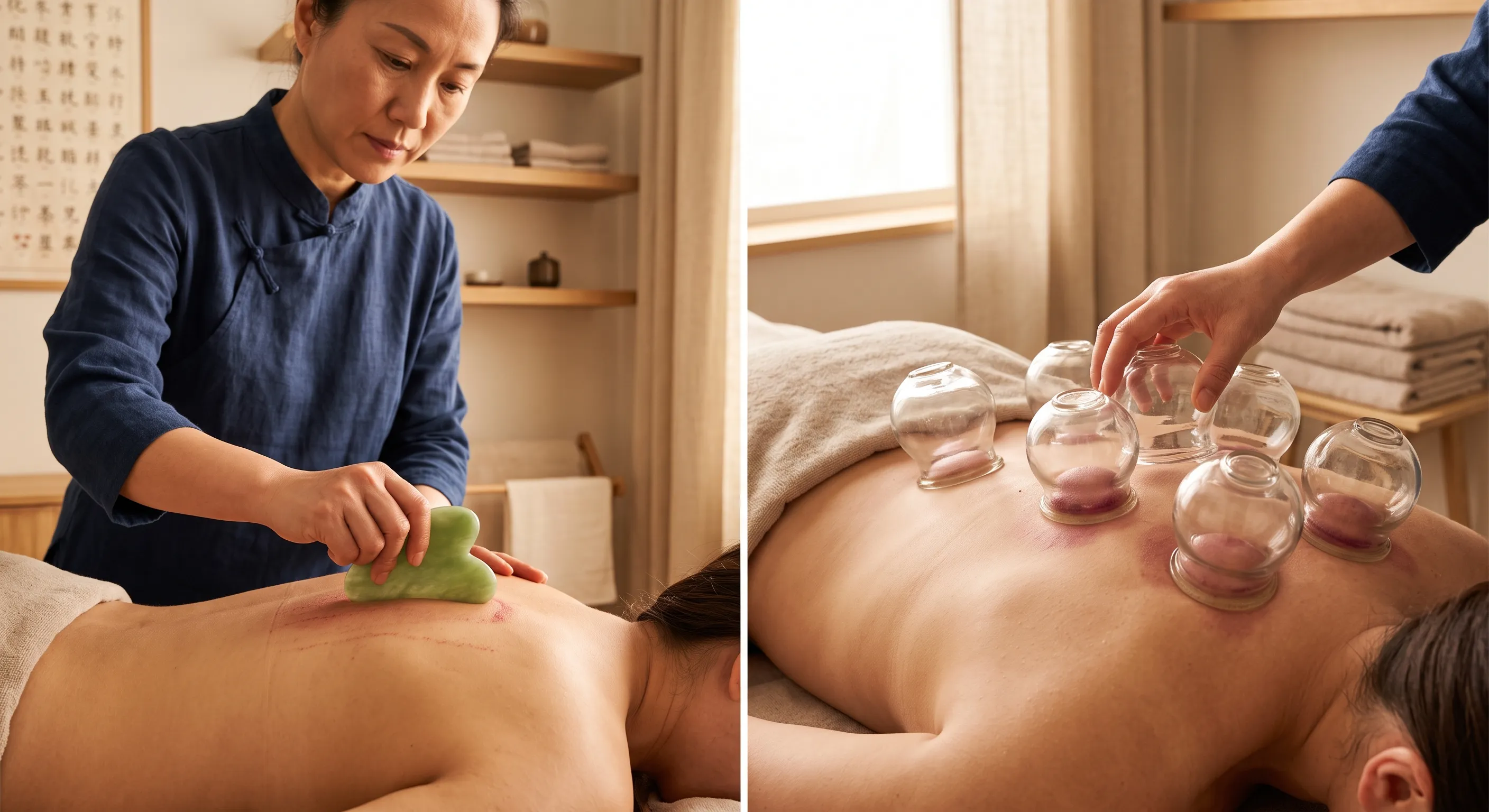
The Similarity: Both Release Tension
Gua sha and cupping are two of the most popular TCM therapies, and for good reason: both work by releasing deep tension, improving circulation, and restoring Qi flow.
But they’re different tools for different jobs. Understanding the difference helps you choose the right treatment—or combine them for maximum benefit.
Gua Sha: The Scraping Tool
What it is: Gua sha uses a smooth stone or jade tool to scrape along meridian pathways, typically along the back, neck, shoulders, and legs.
How it feels: Firm, controlled pressure. You might see mild redness afterward—this is normal and indicates improved circulation.
Best for:
- Muscle tightness and knots
- Poor circulation and cold hands/feet
- Neck and shoulder tension
- Facial rejuvenation (lighter pressure on the face)
- Releasing stagnant Qi along specific meridians
Benefits:
- Immediate relief from muscle tension
- Improved blood flow and lymphatic drainage
- Reduced inflammation
- Better skin tone and facial circulation
- Release of trapped emotional energy
Cupping: The Suction Tool
What it is: Cupping uses glass, bamboo, or silicone cups placed on the skin and suctioned (traditionally with heat) to create a vacuum that draws tissue upward.
How it feels: Deep, pulling sensation. Mild bruising is normal and fades in a week or two.
Best for:
- Deep muscle tension
- Chronic back pain
- Respiratory issues and congestion
- Athletic recovery
- Releasing toxins and stagnant energy
- Addressing root causes of pain
Benefits:
- Deeper penetration than massage alone
- Increased circulation to affected areas
- Pain relief that lasts
- Immune support
- Nervous system calming
Key Differences at a Glance
| Aspect | Gua Sha | Cupping |
|---|---|---|
| Tool | Smooth stone/jade | Glass, bamboo, or silicone cups |
| Sensation | Scraping pressure | Pulling, suction |
| Depth | Surface to mid-layer | Deep tissue |
| Best for | Tension, circulation, facial work | Chronic pain, athletic recovery |
| Recovery | No bruising (usually) | Mild bruising possible |
| Sessions | 1-2 weekly | 1-2 weekly |
Can You Combine Them?
Absolutely! Many practitioners use both in a single session:
- Start with cupping to draw stagnant energy to the surface and loosen deep tension
- Follow with gua sha to smooth meridian flow and release the loosened tension
- Finish with meridian massage for integration and balance
This combination creates powerful, lasting results—especially for chronic pain or athletic recovery.
How to Choose
Choose gua sha if you:
- Prefer lighter, more controlled pressure
- Want immediate muscle relief
- Are interested in facial or cosmetic benefits
- Have sensitive skin or bruise easily
- Want visible results without any marks
Choose cupping if you:
- Have deep, stubborn muscle tension
- Play sports or do intense training
- Struggle with chronic pain
- Want to address issues at the root
- Don’t mind mild temporary bruising
Choose both if you:
- Want maximum therapeutic benefit
- Have multiple layers of tension
- Are committed to deep healing
- Trust your therapist to design a complete protocol
FAQ: Gua Sha & Cupping
Will cupping leave bruises? Cupping often leaves mild circular marks (not true bruises) that fade within a week. The marks indicate stagnant energy release—a sign the treatment is working.
Is gua sha painful? Gua sha should feel firm but never painful. The scraping motion releases tension gradually. Speak up if pressure feels too intense.
How often should I get gua sha or cupping? Weekly sessions work well for most people. After 4-6 sessions, many people shift to bi-weekly or monthly maintenance.
Can I get both treatments in one session? Yes! This combination is powerful and very effective. Many clients prefer it.
Ready to experience both? Book a gua sha or cupping session and let our therapists guide you to the perfect treatment.
Explore all our TCM therapies to find your ideal wellness practice.